
Academic Performance: Hunger-Free Kids Learn Better
As food insecurity continues to affect families across Southern Nevada, Serving Our Kids Foundation remains focused on a simple but powerful goal: ensuring that food-insecure children can dream of the future instead of dreaming about food. Recent feedback and data from our partner elementary and middle schools in the Las Vegas Valley show that this work is making a real, measurable difference in students’ lives.
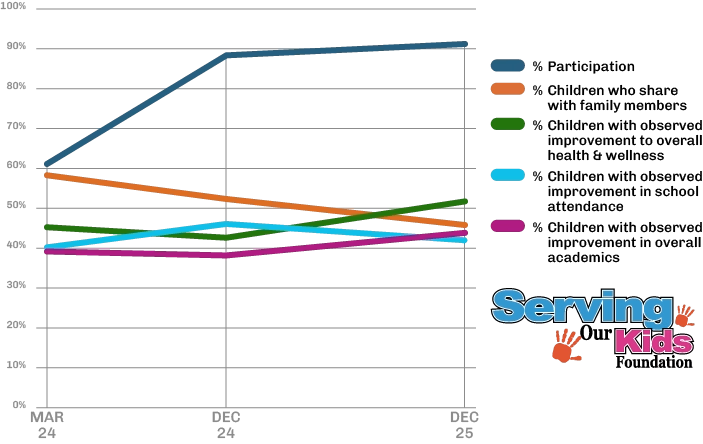
Below is a summary of key findings from our March 2024, December 2024, and December 2025 data collections, along with what these numbers mean for local children and their families.
Strong and Growing Participation
- Mar 2024: 61% participation
- Dec 2024: 88% participation
- Dec 2025: 90.8% participation
Participation represents the percentage of eligible children who are regularly receiving our weekend food bags. The growth from 61% to nearly 91% demonstrates two important trends:
- Rising trust and awareness – More families and school staff recognize the value of the program, and more children are consistently accessing the food they need over the weekend.
- Better reach to those most in need – High participation suggests that barriers such as stigma, communication, or access are being effectively reduced.
This steady increase confirms that our program is not only needed, but increasingly relied upon as a critical support for students.
The Ripple Effect: Food Shared with the Entire Family
Children sharing with other family members:
- Mar 2024: 58%
- Dec 2024: 52%
- Dec 2025: 46%
More than 4 in 10 participating students still report sharing their food with parents, siblings, or other family members. While our primary focus is the child, this data underscores an important reality:
For many households, the food we provide helps stabilize the entire family’s weekend nutrition.
The slight decrease over time may indicate that, as our program and other community supports expand, families are relying a bit less on a child’s food bag to help the whole household—allowing more of the contents to directly benefit the student. Even so, the continued sharing:
- Stretches limited household food budgets,
- Reduces stress at home,
- Helps create a more stable environment for children to learn and grow.
Health & Wellness: Children Feel Better, Look Better, Thrive Better
Observed improvement in overall health and wellness:
- Mar 2024: 45.0%
- Dec 2024: 42.4%
- Dec 2025: 51.5%
Teachers and school staff are in a unique position to notice changes in student health—energy levels, physical appearance, and general well-being. By December 2025, more than half of participating children were observed to have improved overall health and wellness.
This suggests that:
- More consistent weekend nutrition is helping reduce hunger-related fatigue, stomach aches, and headaches.
- Students arrive at school better nourished and more ready to participate.
Improved health is a foundational outcome: when children feel better physically, they are better prepared to attend school, concentrate, and succeed.
School Attendance: Keeping Students Connected to the Classroom
Observed improvement in school attendance:
- Mar 2024: 40.0%
- Dec 2024: 45.9%
- Dec 2025: 41.7%
Hunger is one of the hidden drivers of absenteeism. Children who are not eating regularly may miss school due to illness, fatigue, or family challenges tied to food insecurity.
Across all three data periods, roughly 4 in 10 participating children were observed to have improved attendance. While the December 2025 figure is slightly lower than December 2024, it still reflects a meaningful portion of students whose school participation benefits directly from reliable weekend nutrition.
Every additional day in class:
- Increases learning opportunities,
- Strengthens connections with teachers and peers,
- Supports better long-term academic and social outcomes.
Academic Performance: Hunger-Free Kids Learn Better
Observed improvement in overall academics:
- Mar 2024: 39.0%
- Dec 2024: 38.0%
- Dec 2025: 43.6%
By December 2025, nearly 44% of participating students were reported to show academic improvement. This can include:
- Better focus in the classroom,
- Increased participation,
- More consistent homework completion,
- Improved grades or test performance.
These results reinforce what educators have long known:
Children cannot fully concentrate on reading, math, and problem-solving when they are worried about their next meal. Providing consistent food support strengthens the whole learner—mind and body—and helps remove one of the biggest barriers to academic success.
Listening to Children: What They Love in Their Food Bags
Top favored items remained remarkably consistent over time:
- Mar 2024: Ramen, Fruit Snacks, Cereal
- Dec 2024: Ramen, Fruit Snacks, Cereal
- Dec 2025: Ramen, Fruit Snacks, Cereal
This consistency tells us several things:
- Children are more likely to eat what they enjoy, which increases the effectiveness of every bag we pack.
- Familiar, kid-friendly items provide comfort and a sense of normalcy.
- By pairing these favorites with other staples, we ensure that children both look forward to and fully utilize the food we provide.
By paying attention to what children actually like and consume, we can design food bags that are not only nutritious but also welcomed and enjoyed.
What This All Means for the Las Vegas Valley
Taken together, this data paints a clear picture:
- More children are being reached, with participation nearing 91%.
- Families continue to experience meaningful relief from food insecurity.
- Children’s health, school connection, and academic performance are all showing positive trends.
- Our program remains responsive to students’ preferences, increasing both dignity and impact.
Serving Our Kids Foundation is proud to partner with schools, volunteers, donors, and community members across the Las Vegas Valley to create these outcomes. Every weekend food bag represents more than food—it represents stability, hope, and the chance for a child to focus on learning and dreaming big.
To learn more about our work, access additional impact data, or find out how you can help us reach even more children, please visit servingourkids.org.